
Emotional regulation is often misunderstood in neurodivergent people. Big emotions, shutdowns, meltdowns, impulsive reactions, or emotional exhaustion are frequently labeled as “overreactions” or behavioral problems. In reality, these responses are signs of a nervous system that processes the world differently. Here are some tips to support emotional regulation when Neurodivergent.
Neurodivergence, includes autism, ADHD, sensory processing differences and learning differences; and it comes with unique emotional wiring. Supporting their emotional regulation is not about teaching to suppress feelings or “calm down”, it’s about helping the nervous system feel safe enough to settle, process and recover.
According to the National Institute of Mental Health, emotional regulation is a combination of brain function, stress response, and nervous system regulation—not motivation or willpower.
Self- Regulation is a skill.
Emotional regulation is not a character trait or a matter of willpower. It’s a physiological process. When the nervous system becomes overwhelmed—by sensory input, demands, transitions, or emotional stress, the brain shifts into survival mode. In this state, reasoning, language and problem-solving are often limited.
This means:
- Dysregulation is not intentional.
- Emotional reactions are often automatic.
- Punishment or correction increases distress.
The first step in supporting regulation is recognizing that the body must feel safe before emotions can settle.
Prioritize safety and connection.
Connection is one of the fastest ways to support regulation. A calm, attuned presence can help regulate a dysregulated nervous system.
Helpful approaches include:
- Speaking slowly and softly.
- Using neutral or validating language.
- Reducing verbal input when emotions are high.
- Staying nearby without demanding engagement.
When someone feels emotionally safe, their nervous system can begin to downshift. Connection comes before correction.
Identify common triggers.
Emotional dysregulation rarely comes out of nowhere. It usually follows predictable stressors.
Common triggers for neurodivergent people include:
- Sensory overload (noise, lights, textures, crowds)
- Transitions or unexpected changes
- Social confusion or masking fatigue
- Task initiation or demand overload
- Hunger, fatigue, or lack of downtime
The Autistic Self Advocacy Network (ASAN) emphasizes that reducing environmental stressors is key to regulation. Tracking patterns will help caregivers and educators anticipate needs and reduce overwhelm before emotions escalate.
Support the body first.
Because regulation is physical, body-based strategies are often more effective than talking through emotions.
Body-based supports may include:
- Deep pressure (weighted blankets, compression clothing, firm hugs if welcomed)
- Movement (walking, stretching, rocking, wall push-ups)
- Temperature input (cool water on wrists, warm drinks)
- Slow, rhythmic breathing or visual breathing cues
Calming the body often leads to emotional clarity without needing extensive verbal processing.
Normalize emotional intensity.
Many neurodivergent people experience emotions more intensely and for longer periods of time. This doesn’t mean they are immature or lack skills; it means their nervous system processes emotions deeply.
A shift in mindset can:
- Allow time for emotional recovery
- Avoid rushing someone to “get over it”
- Validate intensity without amplifying it
Acceptance reduces shame, which in turn makes regulation for a Neurodivergent easier.
Build emotional language gently.
Some neurodivergent individuals struggle to identify or name emotions, especially in the moment. Supporting emotional literacy will help regulation over time.
Strategies include:
- Emotion charts or color-coded feelings
- Offering choices instead of open-ended questions
(“Are you feeling frustrated or overwhelmed?”) - Modeling emotional language out loud
(“I’m noticing I feel tense, so I’m taking a breath”)
This builds awareness without pressure and supports long-term regulation skills.
Teach skills during calm moments.
A dysregulated brain cannot learn new skills. Regulation tools should be taught and reinforced when emotions are neutral or positive.
This can look like:
- Practicing breathing during play
- Role-playing stressful situations
- Using visual supports and routines
- Celebrating successful regulation moments
Adjust expectations and demands
Many regulation challenges are intensified by expectations that exceed nervous system capacity.
Supportive adjustments may include:
- Breaking tasks into smaller steps
- Allowing recovery time after stress
- Reducing unnecessary demands
- Offering choices whenever possible
Lowering demands is not lowering standards. It’s making success achievable.
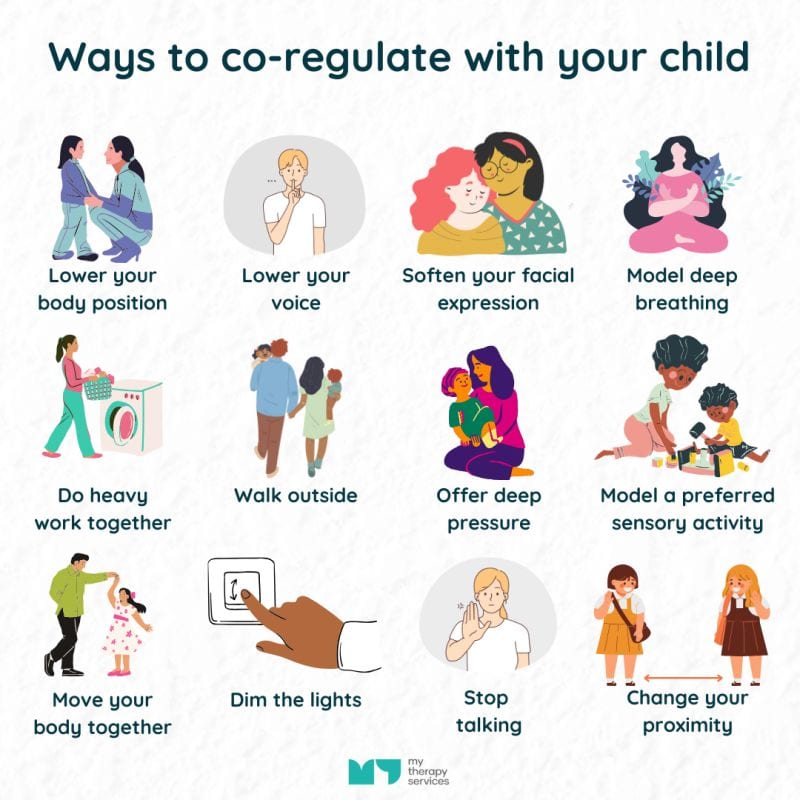
Emphasize co-regulation
Self-regulation develops through co-regulation. Many neurodivergent people need another regulated nervous system nearby before they can regulate on their own.
Co-regulation may include:
- Sitting quietly together
- Sharing slow breathing
- Gentle grounding reminders
- Consistent, calm presence
Over time, these experiences are internalized, supporting independent regulation.
Respect shutdowns and meltdowns
Meltdowns and shutdowns are not misbehavior. They are signs of overload.
During these moments:
- Reduce stimulation
- Avoid reasoning or lecturing
- Ensure physical and emotional safety
- Allow space and recovery time
Afterward, when calm returns, gentle reflection may be helpful—but never forced.
Focus on long-term healing, not quick fixes
Emotional regulation improves with:
- Consistency
- Predictability
- Nervous system support
- Self-compassion
Progress may be slow and nonlinear. That’s normal.
Supporting emotional regulation when neurodivergent is not about controlling emotions—it’s about honoring how the nervous system works. Neurodivergent people don’t need to be fixed. They need to be understood and given the tools that work for their brains.
At Therapeutic Educational Consulting, we guide, support and recommend placement options for treatment centers, nature-based therapy, therapeutic boarding schools, struggling-to-launch programs and alternative education for adolescents and young adults.
Schedule a no-cost discovery call with Rae Guyer, your therapeutic consultant to discuss options.
© Therapeutic Educational Consulting
Image credit, My Therapy Services


