
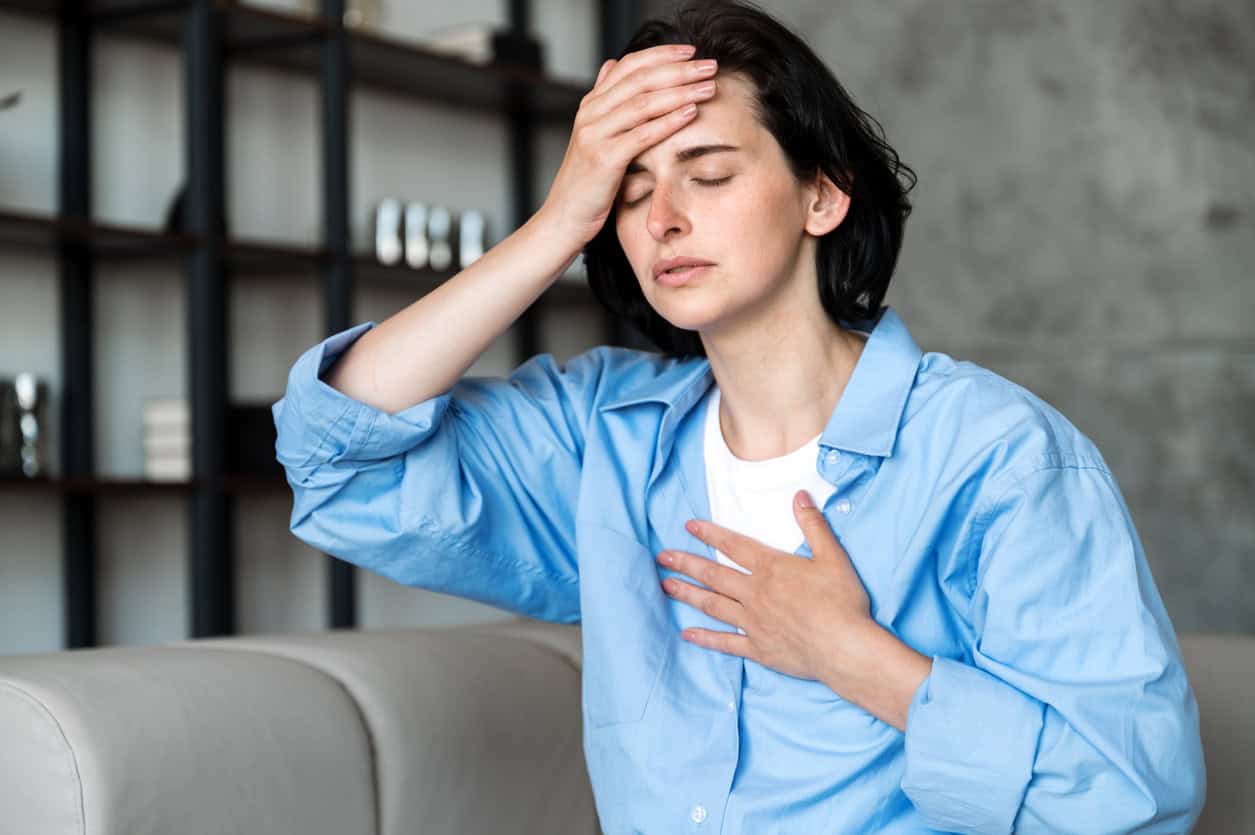
A panic attack can feel like your body has suddenly gone into alarm mode. It feels like something is deeply wrong, that you have to run or hide — even when you are safe. It can arrive suddenly and unexpectedly. If feels frightening and out of control. It is our body’s fight-or-flight system turning on at full volume. A panic attack feels like a rush of fog or you catch catch a breath. Or an unsettling deep feeling of doom.
What does a panic attack feel like physically?
For some, it begins with a sudden rush of physical sensations: the heart starts pounding, breathing becomes shallow, and a wave of dizziness washes over you. It may feel like you can’t catch your breath, like the air isn’t reaching your lungs. Your mind turns to mush; making a decision is impossible. This can trigger more fear inside, then that fear intensifies the physical symptoms… creating a loop, or even a progression of intensity.
Others report tightness in the chest, tingling in the hands or face, or a sense of unreality—like the world around them feels distant or foggy. This is called derealization, and it is a common response to extreme anxiety. It does not mean you are going crazy. It is your nervous system trying to cope with overwhelming sensations.
What does a panic attack feel like emotionally?
A panic attack can feel like impending darkness. A sudden conviction that something terrible is about to happen, even if they cannot name what it is, and even if they know it is not reality. It can feel like you’re in an emergency — The truth is, panic attacks are uncomfortable, but not dangerous. They typically peak within 10–20 minutes and then subside.
A key feature of a panic attack is that it feels disproportionate to the situation. You might be sitting on your couch, scrolling your phone, or talking to a friend. There is nothing outwardly threatening and yet your body reacts as if it is in danger. This mismatch between external reality and internal alarm is what makes panic attacks so confusing.
It is also why many people worry they are having a medical emergency. Heart palpitations and chest pain can mimic a heart problem. Shortness of breath can mimic asthma or another respiratory issue. If you are unsure whether what you are experiencing is a panic attack or a medical condition, seeking medical care is always appropriate.
Panic attacks vary from person to person. Some people experience them once in a lifetime. Others may have them more frequently as part of a broader anxiety disorder. Triggers also differ. And sometimes there are no triggers. Confusing, right? Yet, not dangerous.
Although a panic attach can feel terrifying, your body is releasing adrenaline and other stress hormones. Those chemicals are meant to protect you in dangerous situations. As they metabolize, the sensations fade.
What can you do to get through a panic attack?
The key words are “get though”. The more you fight it, the more it will persist. Grounding techniques can help. Slow, deep breaths signal to your nervous system that you are safe. One common technique is the 4-5-6 breath: inhale for four seconds, hold for seven, and exhale for eight. This helps regulate breathing and calm the body. Another strategy is to name five things you can see, four you can feel, three you can hear, two you can smell, and one you can taste. This anchors attention to the present moment.
It is also helpful to remind yourself: “I am having a panic attack. It will pass.” This may sound simple, but labeling the experience can reduce its intensity. Panic thrives on uncertainty. When you recognize it for what it is, you reclaim some sense of control.
If panic attacks are frequent or interfere with daily life, professional help can make a big difference. Therapy can help people identify thought patterns that fuel anxiety. Coaching can help with coping skills. Medications may also be effective. There is no one-size-fits-all approach.
Some medical organizations also provide reliable information. The Mayo Clinic has detailed guides on anxiety and panic attacks. The American Psychological Association also publish resources on anxiety and treatment options. Learning about the biology of panic can demystify it and reduce fear.
A panic attack feels like you’re losing your mind, but it’s just your nervous system activated. The sensations feel real, but they are not temporary and not dangerous. It my feel like your lungs are collapsing, but it’s just tightness in your nervous system. A panic attach will always pass.
At Therapeutic Educational Consulting, we guide, support and recommend placement options for treatment centers, nature-based therapy, therapeutic boarding schools, struggling-to-launch programs and alternative education for adolescents and young adults.
Schedule a no-cost discovery call with Rae Guyer, your therapeutic consultant to discuss options.
© Therapeutic Educational Consulting
Image credit: brizmaker


